Print
China Daily
Updated:
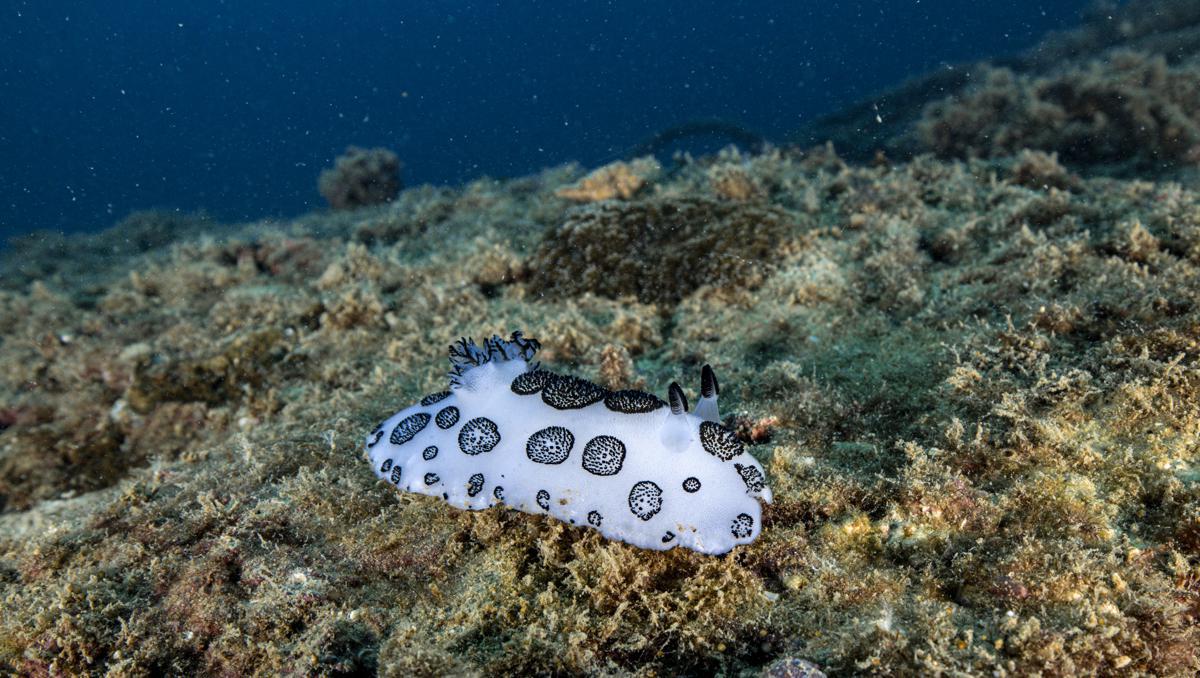
A panda sea bunny — its white body dotted with neat black spots, resembling a miniature "undersea panda" — moves slowly among scattered coral clusters at the marine ranch off Wuzhizhou Island in Sanya, Hainan province, on Oct 19. [Photo provided to chinadaily.com.cn]
Divers conducting routine underwater ecological monitoring at the Wuzhizhou Island's marine ranch in Sanya, Hainan province, on Oct 19, observed multiple marine species, including a Jorunna funebris sea slug — commonly known as a panda sea bunny — measuring about 10 centimeters.
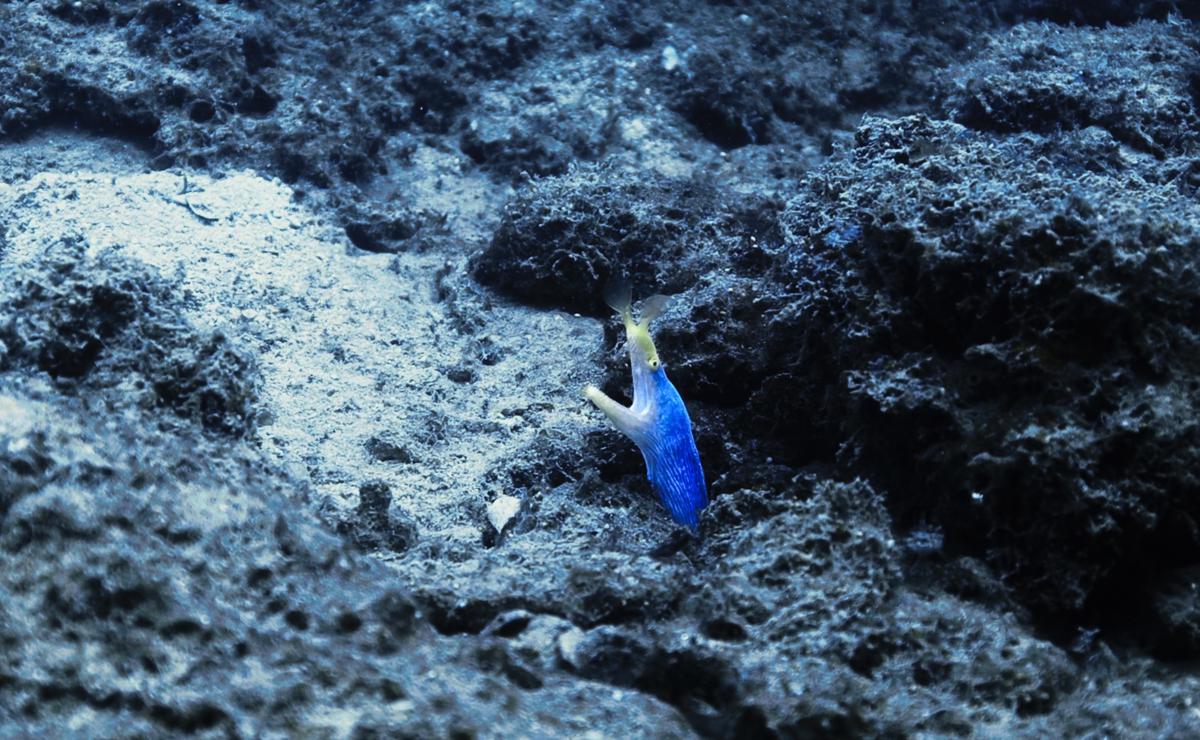
The individual, roughly the length of a standard pen, is considered large for its kind, and sea slugs of this size are uncommon in the coral reef waters off Hainan Island, marine experts said. The same monitoring dive also recorded a reticulated nudibranch and the slender, agile ribbon eel — both rarely seen species — marking the second time the area has logged multiple uncommon marine organisms, following an earlier sighting of a leaf sheep sea slug.
A reticulated nudibranch is seen at the marine ranch off Wuzhizhou Island in Sanya, Hainan province, on Oct 19. [Photo provided to chinadaily.com.cn]
The panda sea bunny, a typical tropical coral reef indicator species, is highly sensitive to its environment and inhabits only clean water with intact reef structures and abundant food. Such fragile mollusks grow slowly and can reach mature size only where the marine environment remains stable over the long term and the food chain is complete.
"These small marine organisms are extremely sensitive to environmental change. If water quality or reef ecology fluctuates, they quietly disappear," underwater photographer Jiang Guangfeng, who discovered these sea creatures, said.

A slender, agile ribbon eel swims among scattered coral clusters at the marine ranch off Wuzhizhou Island in Sanya, Hainan province, on Oct 19. [Photo provided to chinadaily.com.cn]
The appearance of less-common reef-dwelling species follows more than a decade of ecological work. Since 2010, with support from university research teams, the Wuzhizhou Island Tourist Area has carried out systematic and sustained ecological restoration, deploying artificial reefs and sunken ship structures to create three-dimensional undersea habitats for fish, shrimp and shellfish, while staff members have transplanted and nurtured coral seedlings one by one. To date, more than 63,000 square meters of ecological restoration have been completed and more than 70,000 coral fragments transplanted.
Copyright © Sanya Municipal Government. All rights reserved.
Presented by China Daily.